


Software development and data systems for Enterprise
Turn business questions into decisions in minutes.
Connect the data behind revenue, margin, marketing, and operations. See what changed, which factors moved with it, and where to investigate next — in minutes, not days.
Your business + your data + our expertise + our technology = decisions in minutes, not days.
One system, built around the questions your business needs to answer.When a metric breaks, see what caused it.
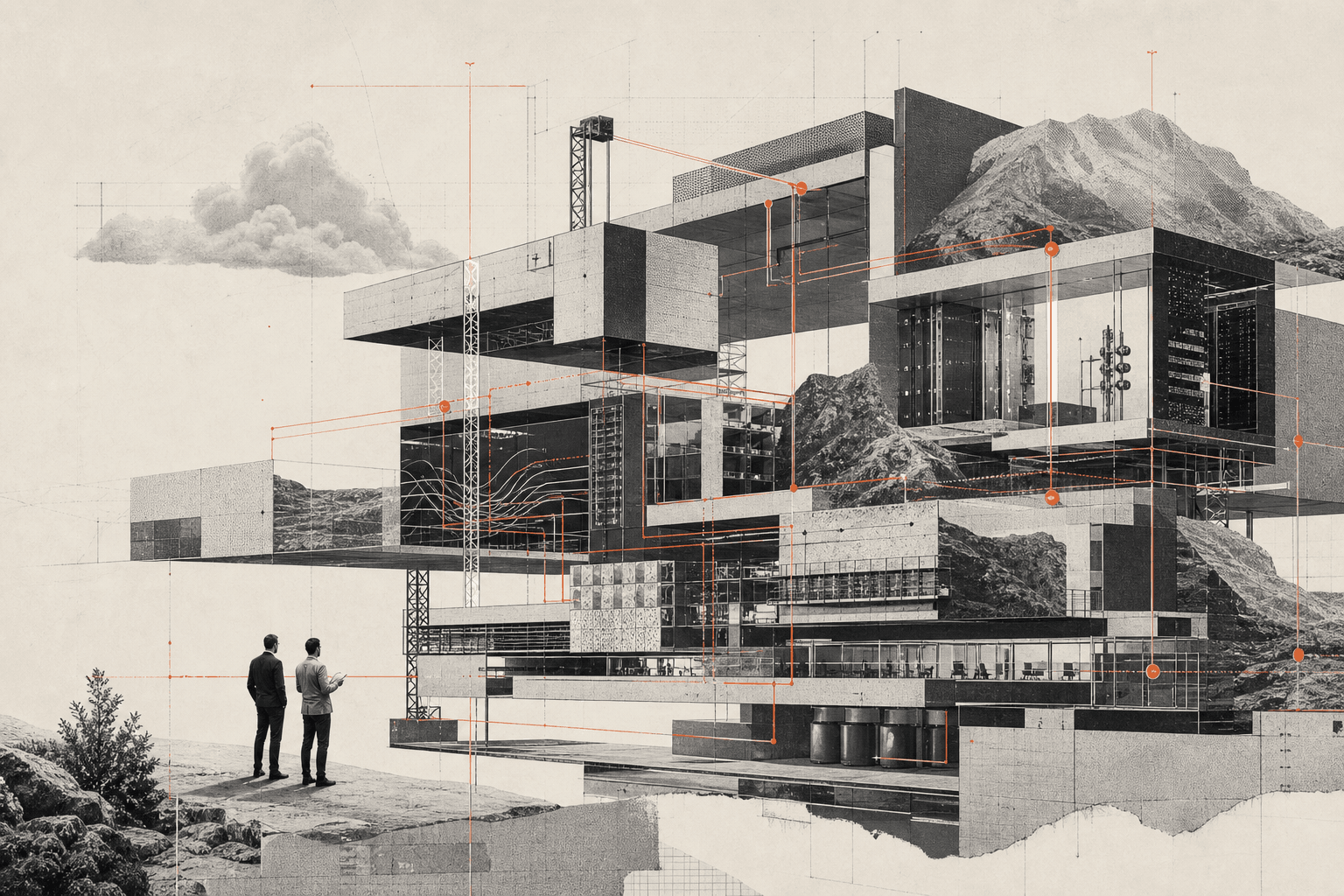
Revenue drops. Margin narrows. Conversion slips. The result is visible; the chain of events behind it is not.
Teams pull reports, reconcile spreadsheets, and compare numbers from different systems. The answer arrives late, while the business keeps moving.
- 01What changed first?
- 02Which factors moved with it?
- 03Where is the problem concentrated?
- 04What should the team investigate now?
A dashboard shows the number. A decision system helps you understand what sits behind it.
One system. Three layers between data and decision.
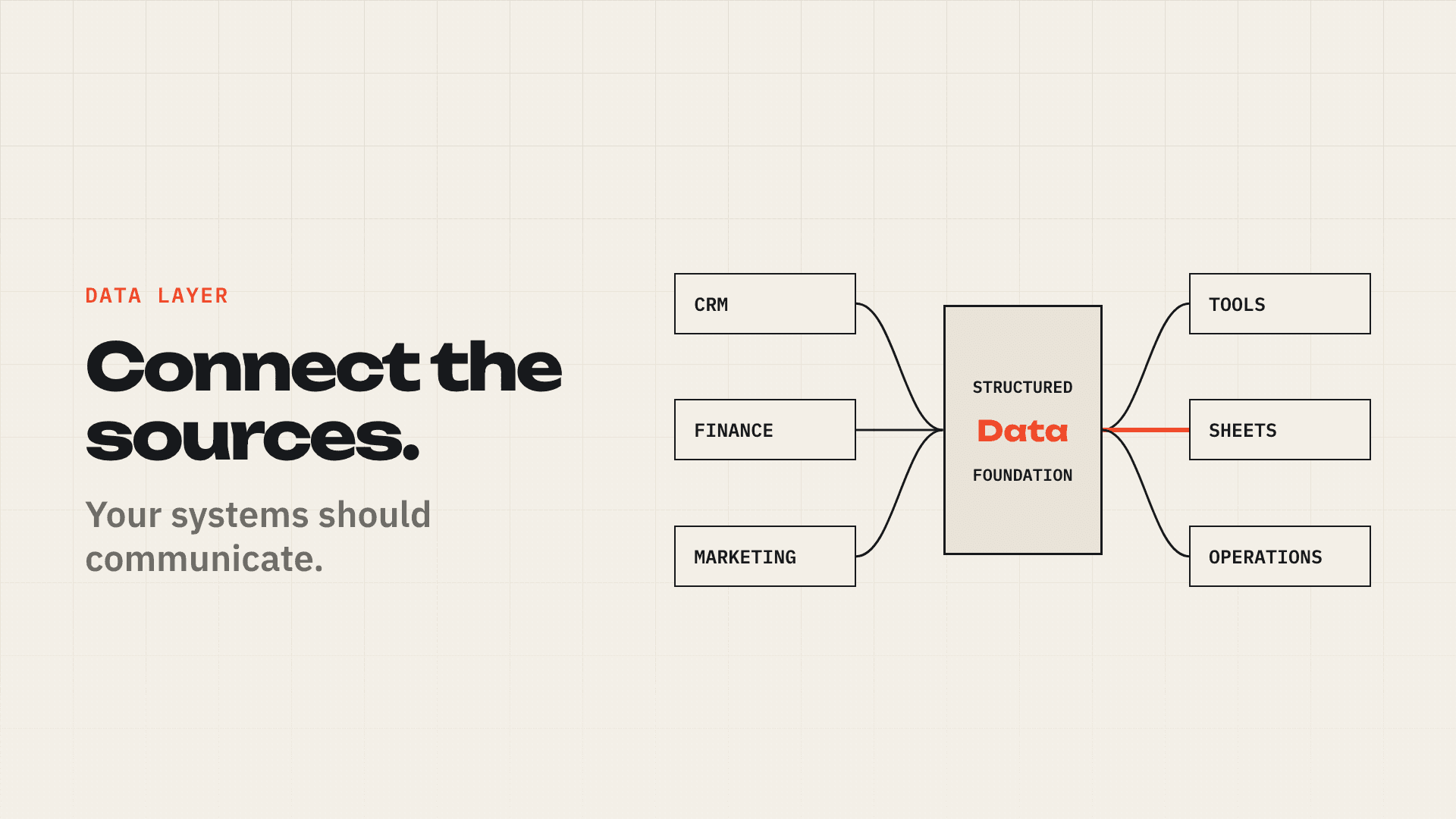
The data layer connects the sources. The analytics layer explains what moved. The decision layer puts the answer where people can act on it.
Select a layer to inspect the system
Definitions · Relationships · Diagnostics
Explain the movement.
Define the metrics that matter, connect related factors, and make changes visible across teams, channels, departments, and processes.
See where a change began and where to investigate next.
Questions your system should help answer.
The answer may sit across several systems. The interface should not make that your problem.
- Q1
Why did revenue move away from plan?
- Q2
Which change is reducing margin?
- Q3
Where is the sales funnel breaking?
- Q4
Which marketing activity is linked to profitable demand?
- Q5
Which process is slowing operations?
- Q6
Which department or direction is changing overall performance?
Built around the question, not the tool.
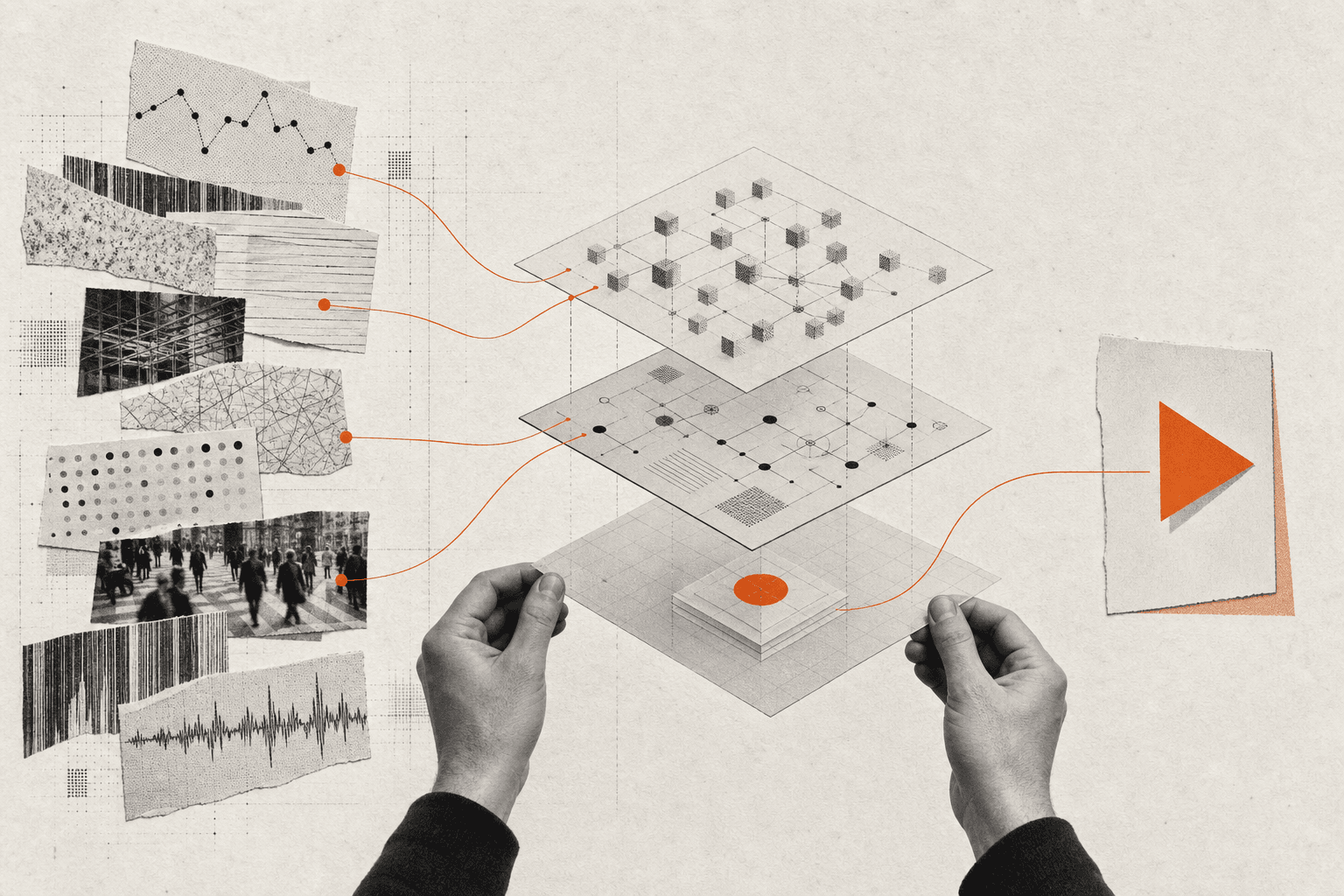
The technology follows the decision the business needs to make.
- 01
Start with the decision
Define the metric, the business question, and the people who need the answer.
- 02
Design the data foundation
Map the sources, resolve inconsistent definitions, and design how data should move through the system.
- 03
Build the analytical logic
Turn business rules and related factors into a model that can be examined and improved.
- 04
Deliver the working interface
Build the dashboard, portal, or custom software that gives each team the right view of the answer.
- 05
Make it usable
Help the team understand the system and use data more consistently in day-to-day decisions.
Vendor-neutral by design. The architecture should fit the business, not a technology logo wall.
Software development for Enterprise
Your business is not standard. The system does not have to be.
RevenuePattern designs and builds custom software products and data systems for complex organizational environments. That can include integrations, internal platforms, web portals, analytical products, and decision interfaces shaped around existing processes.
Complex system and data integrations
Custom web portals and internal platforms
Analytical products and decision interfaces
Software built around non-standard workflows
See your business in the system.
Tell us which metric, process, or decision you need to understand. We will first map the context, then show how a system could work around your data and workflow.
You do not need to upload data through the website. If a small sample would make the demo more useful, its transfer can be agreed separately after the first conversation.
contact@revenuepattern.com